Home › Commercial Gravel-to-Asphalt Conversions
Turn dusty, rutted surfaces into clean pavement with commercial gravel to asphalt conversions in Kansas City, MO. We regrade and compact your gravel lot or road, then install durable asphalt. The result is easier maintenance, cleaner vehicles, and better curb appeal. Request a site review and proposal to convert your gravel surface to asphalt.
Precision Asphalt Kansas City provides professional commercial gravel to asphalt throughout Kansas City, MO, Missouri and the surrounding area. Our licensed, insured crew delivers safe, clean, on-time work with a free estimate before anything begins. Call (816) 326-1167 or request your free quote.
Turn Problem Gravel Lots Into Durable Asphalt Surfaces
If you manage a commercial property in Kansas City, MO, you already know a gravel lot looks cheap at first, then turns into ruts, mud, dust, and constant maintenance. Precision Asphalt Kansas City specializes in commercial gravel to asphalt conversions that replace those headaches with a clean, striped, stormwater-conscious asphalt surface built for real traffic.
Our crews focus specifically on commercial use cases: retail centers, office parks, industrial yards, churches, schools, and multifamily parking areas. Every site is different. A gravel truck lot in the Fairfax or East Bottoms industrial area needs a very different asphalt structure than a customer parking lot off Metcalf or N Oak. We factor in soil conditions, truck counts, and Kansas City’s freeze-thaw cycles so the new pavement does not fail after just a couple of winters.
From first site visit through final striping, you get one point of contact, clear options, and realistic timelines so you can keep your business running while work is underway.
Site Evaluation: What We Look At Before Any Gravel-to-Asphalt Conversion
A proper commercial gravel to asphalt project in Kansas City starts with a detailed site evaluation. At Precision Asphalt Kansas City, we walk the entire area with you, not just glance from the street.
Key things we check:
• Subgrade and existing base: We dig test spots to see what is under the gravel. Is there compacted rock, native clay, or old construction debris? Kansas City has many fill sites and variable clay, especially around the rivers and older industrial zones, and that changes how we build the pavement section.
• Drainage and standing water: We visit after a rain when possible or look for water lines on curbs and buildings. If water currently ponds on your gravel lot or runs toward doors or docks, that has to be corrected with grading, new inlets, or added swales so the asphalt surface does not rut or heave.
• Traffic type and patterns: We count axles and review delivery routes, trash truck paths, and fire lanes. A restaurant parking lot in Waldo gets light traffic compared to a distribution warehouse near I-70. We design the asphalt thickness and base depth for how the pavement will actually be used, not a generic template.
• Access constraints: For downtown or tight urban sites in Midtown, Crossroads, or Westport, we plan how to stage equipment and materials without blocking streets or tenants, which affects schedule and phasing.
This upfront evaluation lets us give you a realistic cost range and prevents unpleasant surprises once work starts.
How We Convert Commercial Gravel Lots To Asphalt, Step By Step
Once we understand your site, Precision Asphalt Kansas City follows a structured process to turn your gravel into a long-lasting asphalt surface.
1. Pre-construction planning: We confirm square footage, phasing, utility locations, and access. For active businesses, we often phase work so part of the lot stays open for customers or trucks. You get a calendar that shows what areas close on what days.
2. Strip and reshape existing gravel: We use graders and skid steers to cut high spots, remove vegetation, and shape the lot to the planned slopes. Any soft or pumping areas are undercut and replaced with compacted aggregate base.
3. Subgrade and base preparation: For most Kansas City commercial sites, we install or recondition a rock base using AB-3 or similar aggregates, then compact in lifts with heavy rollers. We verify density with proof rolling, looking for deflection. Poor clay soils on the Missouri side may get geotextile fabric or added base thickness for stability.
4. Drainage corrections: If the gravel lot currently holds water, we change that before paving. This may involve installing or adjusting area drains, adding valley gutters, or tightening grades toward existing storm inlets. Proper drainage is non-negotiable for long-term performance.
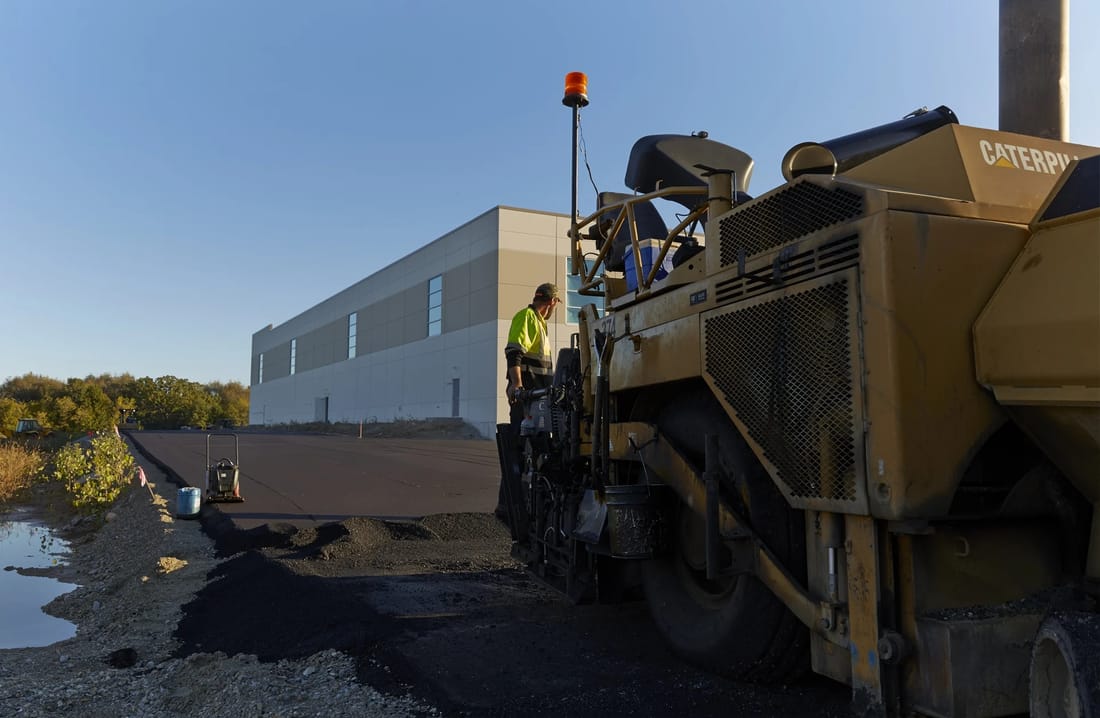
5. Asphalt paving: We typically place asphalt in one or two lifts depending on traffic load. For heavy truck areas, we often use a thicker base course with a surface course over the top. Mix design follows MoDOT or local municipal standards. We use self-propelled pavers for consistent mat thickness and steel and pneumatic rollers to achieve target compaction.
6. Transitions and tie-ins: Where your new asphalt meets existing streets, docks, or building entrances, we hand-finish and compact transitions so there are no trip lips or abrupt bumps. These details are critical in older Kansas City facilities where elevations are not perfectly uniform.
7. Finishing, striping, and signage: Once the asphalt cools, we add pavement markings, ADA-compliant stalls and access aisles, directional arrows, stop bars, and wheel stops as needed. If you need concrete dumpster pads, bollards, or curbing, we coordinate those as part of the same project.
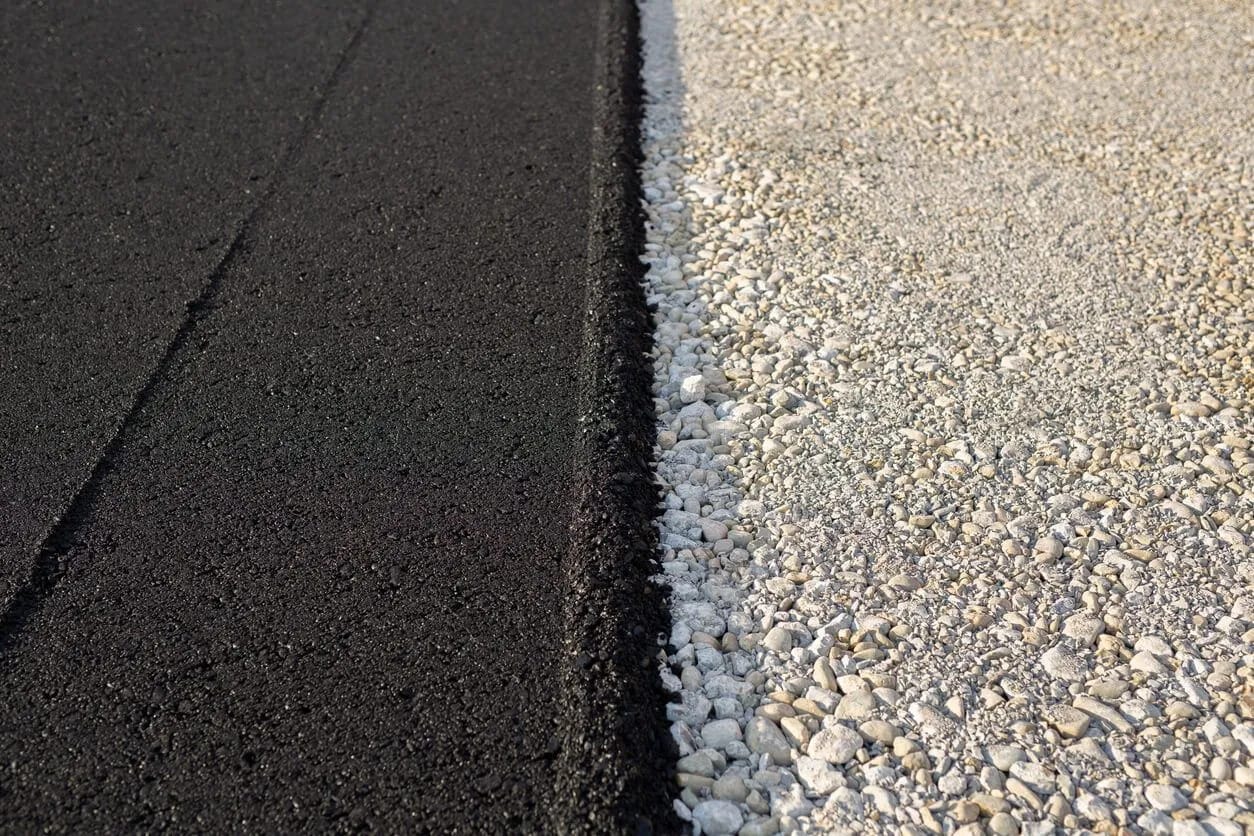
The result is a clean, functional asphalt surface that drains, supports your traffic, and makes the property look intentionally maintained instead of temporary.
Design Options: Thickness, Mix Types, and Layout Choices
A commercial gravel to asphalt project is not one-size-fits-all. Precision Asphalt Kansas City helps you choose design options that fit your use, budget, and future plans.
Thickness and structure: For light car-only parking, we may recommend 3 to 4 inches of asphalt over a well-compacted base. For mixed-use lots with trash trucks, delivery trucks, or fire lanes, we often go to 5 or more inches total, sometimes with a heavier-duty base course in driving lanes and truck routes. In industrial yards with frequent semi traffic, we may design even thicker sections or reinforce key loading and turning zones.
Mix type: We match asphalt mix to project demands. High-traffic entrances, loading areas, and drive lanes may get a tougher surface mix that holds up to tight turning. Low-speed parking bays can use a standard commercial mix that balances durability and cost.
Drainage and grading choices: On flat Kansas City sites, we might recommend shallow swales, added inlets, or slightly raised pavement at building faces to keep water away from structures. Sloped lots may need special attention to keep water from running into sidewalks or neighboring properties.
Layout and striping: When converting from gravel, there is often no formal layout. We can redesign your parking pattern to add stalls, improve traffic flow, and bring ADA access up to current standards. That may include new accessible routes to entrances, van-accessible stalls, and clearly marked fire lanes in coordination with local code requirements.
Future flexibility: If you plan future building expansions or additional phases, we can design the asphalt to accommodate future tie-ins, conduit crossings, or dock modifications without wasting what you install today.
What Drives Cost On Commercial Gravel-to-Asphalt Conversions
Owners and managers in Kansas City often ask why one gravel lot conversion quote is higher than another. Precision Asphalt Kansas City explains our pricing in plain terms so you can compare apples to apples.
Major cost drivers include:
• Subgrade condition: If the existing gravel sits on firm, well-drained soil, cost is lower. If we find soft clay, organics, or old rubble, we need to undercut and rebuild sections, which adds excavation, rock, and labor.
• Required base thickness: Thin or loose gravel that has been pushed around for years may need a new aggregate base installed to achieve proper thickness, usually 4 to 8 inches for commercial work. More base equals more cost but is crucial for heavy traffic.
• Asphalt thickness and area: Asphalt is priced by ton and area. A retail parking lot for cars only will cost less per square foot than an industrial truck yard needing thick asphalt for semi traffic.
• Drainage work: Installing or upgrading inlets, adding valley gutters, tying into city storm lines, or reworking grades can be a significant portion of a project budget, especially inside city limits where storm compliance is more tightly enforced.
• Site access and phasing: Sites that require night work, tight phasing to keep half the lot open at all times, or specialized traffic control around busy streets will cost more than open sites where we can work in larger, more efficient sections.
• Regulatory items: Depending on location, you may need permits, SWPPP measures for erosion control, or specific details to satisfy Kansas City, MO inspections. We account for those in our proposals so they do not appear as surprise extras.
When we price your project, we show what is included line by line so you can see where the money goes and what, if anything, has allowances that could change once we open up the gravel.
Common Problems With Gravel Lots and How We Solve Them
Moving from gravel to asphalt is usually driven by recurring problems. Precision Asphalt Kansas City addresses those issues directly in our designs and construction methods.
Mud and rutting: Gravel lots in low areas of Kansas City, especially near the Missouri River or older industrial zones, often stay wet, then rut under traffic. We solve this by improving drainage, rebuilding the base, and using a thicker asphalt section in main drive lanes to keep the surface stable.
Dust and airborne gravel: Dust from gravel lots can be a nuisance for nearby businesses and residential neighbors, and loose rock can chip vehicles. Asphalt eliminates loose rock at the surface. For windy, open properties, we coordinate edges and transitions to prevent gravel from migrating from remaining unpaved areas.
Poor accessibility and liability exposure: Gravel makes it hard to maintain ADA-compliant access and can be a trip hazard. Our conversions create smooth routes for wheelchairs and walkers, correct slopes where feasible, and add clear striping and signage to demonstrate compliance and reduce risk.
Uncontrolled drainage: Gravel lots often allow water to run wherever the land slopes. When we convert to asphalt, we intentionally control water using slopes, gutters, and inlets so it moves away from buildings, docks, and neighboring parcels.
Hidden underground issues: Old properties sometimes hide surprises like shallow utilities, abandoned foundations, or soft fill. We reduce risk by probing and test digging during design. If we hit an unknown condition during work, we bring you options to correct it while equipment is already on-site, which is usually cheaper than postponing repairs.
By targeting the real causes of your gravel problems instead of just covering them, we give your property a long-term fix instead of a cosmetic change.
What Kansas City Property Owners Should Do Next
If you are considering a commercial gravel to asphalt conversion anywhere in the Kansas City, MO area, start with information, not assumptions. Gather the basics: total square footage of your lot, typical daily vehicle counts, where trucks drive and park, and where you see water standing after a rain. Photos of problem spots help too.
When you contact Precision Asphalt Kansas City, we schedule an on-site visit, walk the property with you, and discuss how you operate the site through the week. For retail, that may mean working early mornings or off-peak days. For industrial and logistics facilities, we may coordinate around shift changes or tight dock schedules.
We then provide a written proposal that outlines the recommended pavement structure, drainage improvements, phasing plan, and pricing. If you need to stage the work over multiple budget years, we can prioritize the highest-risk or highest-traffic areas first and leave room to tie in future phases cleanly.
A well-designed conversion from gravel to asphalt improves curb appeal, safety, and long-term maintenance costs. Instead of recurring grading and rock deliveries, you move to predictable sealcoating and marking schedules that are far easier to budget.
When you are ready to talk about converting your gravel lot to asphalt, involve a contractor who understands Kansas City soil, weather, and regulations. Precision Asphalt Kansas City is set up specifically for these commercial conversions, from small business parking lots to multi-acre industrial yards.